Abstract
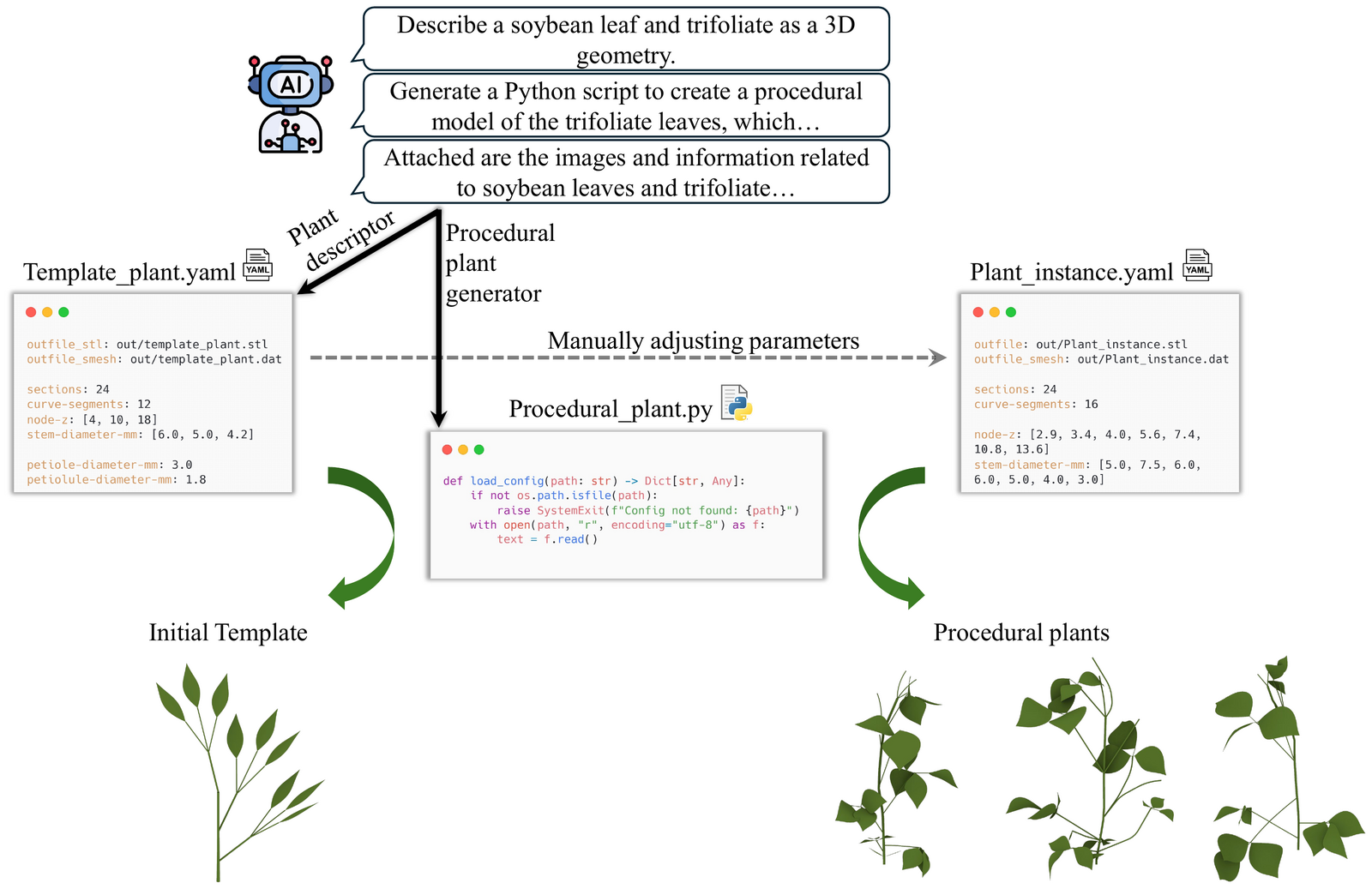
Accurate 3D plant models are crucial for computational phenotyping and physics-based simulation; however, current approaches face significant limitations. Learning-based reconstruction methods require extensive species-specific training data and lack editability for hypothesis-driven research. Procedural modeling offers parametric control and large model variability but demands specialized expertise in geometric modeling and an in-depth understanding of complex procedural rules, making it inaccessible to domain scientists. We present FloraForge, an LLM-assisted framework that enables domain experts to generate biologically accurate, fully parametric 3D plant models through iterative natural language Plant Refinements (PR) during template creation, minimizing the need for programming expertise. Our co-design workflow leverages LLM-assisted code generation to progressively refine Python scripts that generate parameterized complex plant geometries as Non-Uniform Rational B-Spline (NURBS) surface representations, with botanical constraints. Plant organs are represented as spline surfaces that can be easily tessellated into polygonal meshes with arbitrary precision, ensuring compatibility with functional structural plant analysis workflows such as light simulation, computational fluid dynamics, and finite element analysis. We demonstrate the framework by generating procedural models of multiple maize genotypes, soybean (which shares the procedural generator with mung bean), and mung bean, with one plant tracked across different developmental stages. We fit procedural models to empirical LiDAR and NeRF-derived point cloud data through manual refinement of the Plant Descriptor (PD), a human-readable YAML file originally templated by the LLM, obtaining consistently low mean symmetric Chamfer distances that indicate close agreement between generated models and measured plant geometry. The pipeline generates dual outputs: triangular meshes (STL or OBJ) for visualization and triangular meshes with additional parametric metadata for quantitative analysis (SMESH). We further illustrate analysis-ready use by coupling the procedurally generated models to the HELIOS framework to simulate diurnal photosynthetically active radiation interception in virtual maize and mung bean fields across growth stages.
Highlights
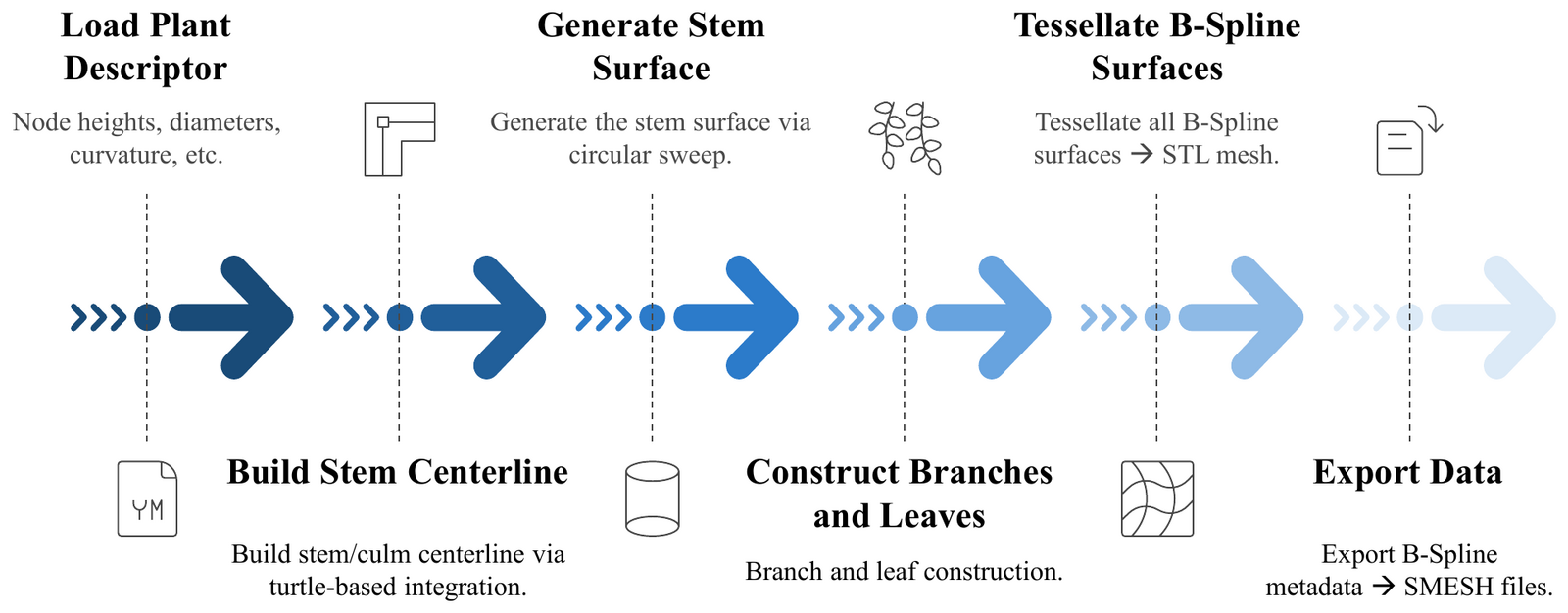
How it works
A domain expert describes a plant in plain language. The LLM drafts and iteratively refines a Python Procedural Plant Generator (PPG) through successive Plant Refinements — adding organs, botanical constraints, and curvature controls turn by turn.
The generator reads a Plant Descriptor: a human-readable YAML file that exposes every parameter (node heights, stem radii, leaf shapes, phyllotaxy, curvature). Editing the YAML produces new, biologically consistent plants — no code changes required.
Organs are NURBS surfaces, tessellated to arbitrary precision and exported as STL/OBJ for visualization or SMESH with parametric metadata for analysis.
The full design dialogue is released with the project: Plant Refinement transcripts and example Plant Descriptors.
Results
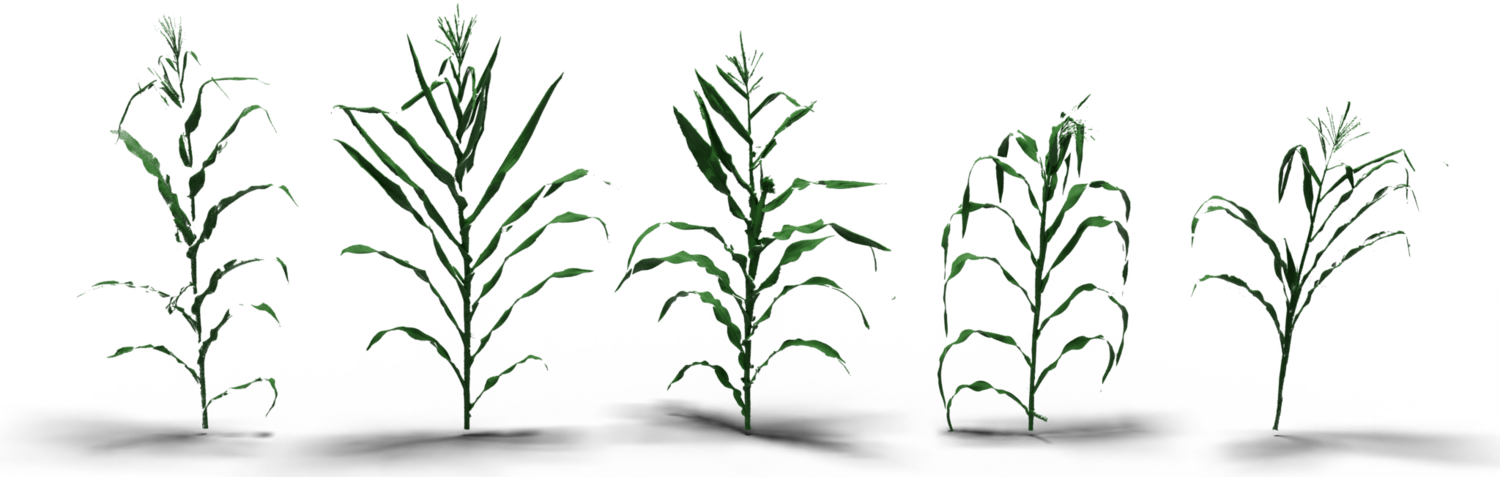
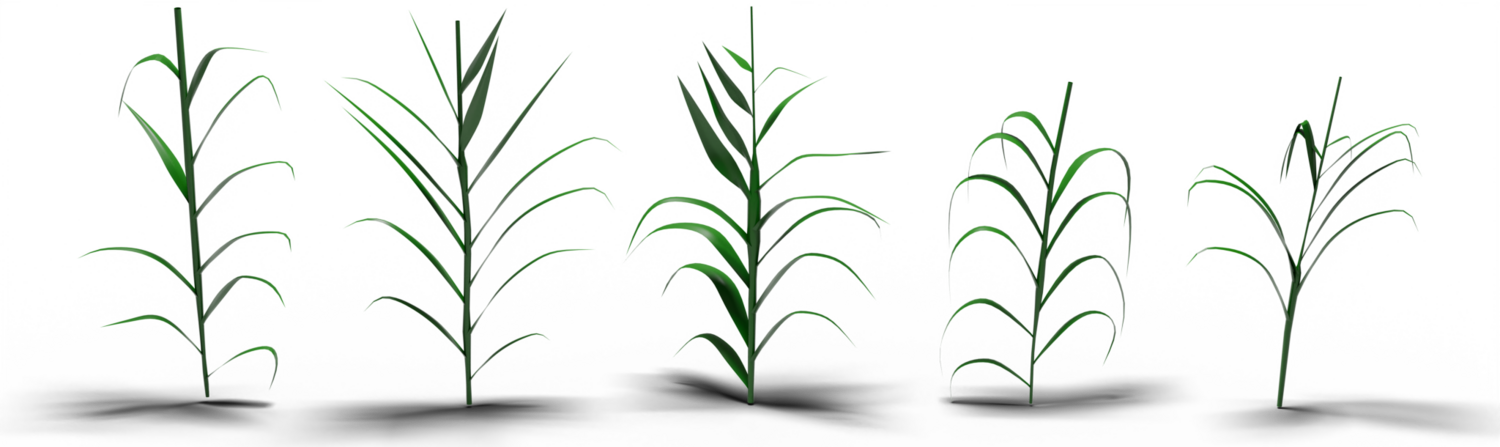
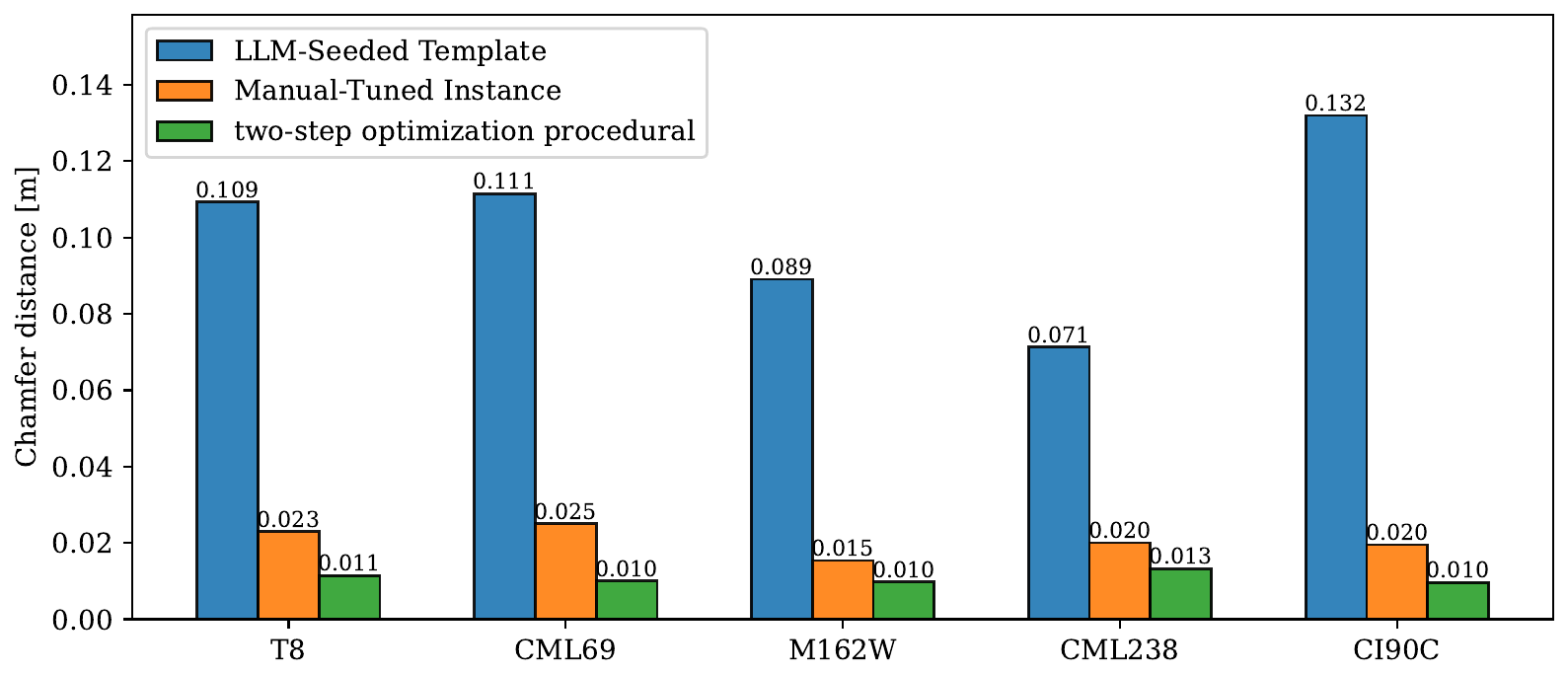
Procedural models are fit to empirical LiDAR (maize) and NeRF-derived (dicot) point clouds by tuning the YAML Plant Descriptor, reproducing plant-specific architecture at consistently low mean symmetric Chamfer distance.
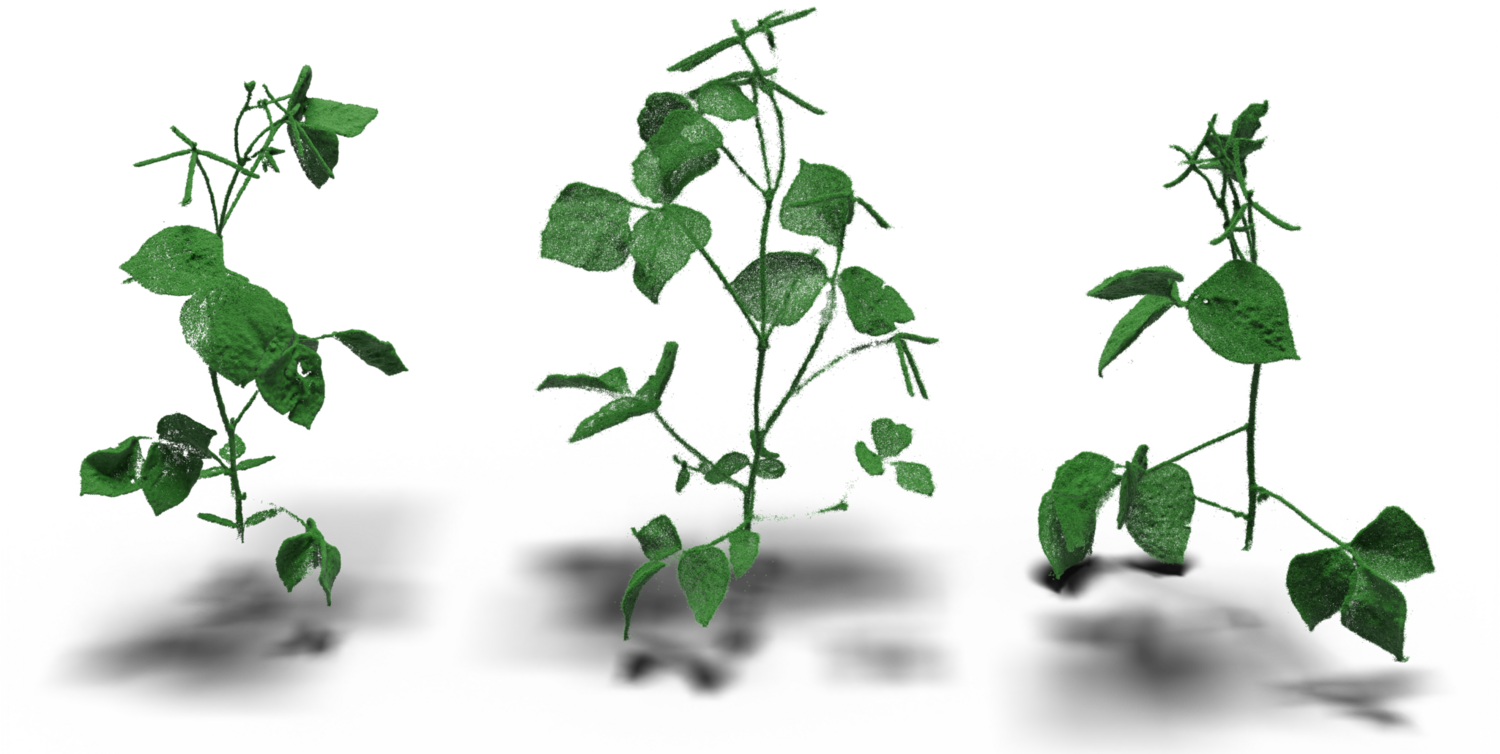
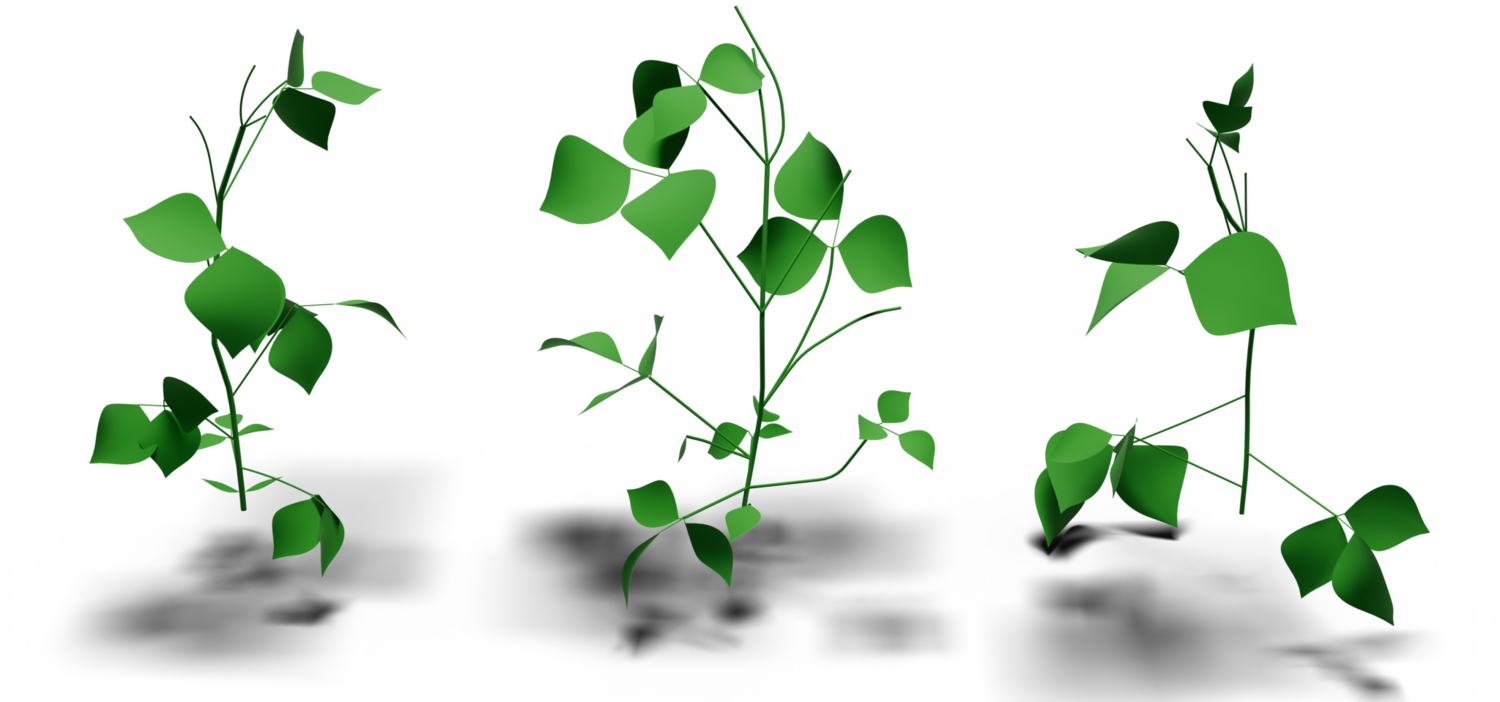
Soybean shares the dicot procedural generator with mung bean. Want rotating 3D renders here too? Send GIF/MP4s and I'll drop them in.
Growth stages
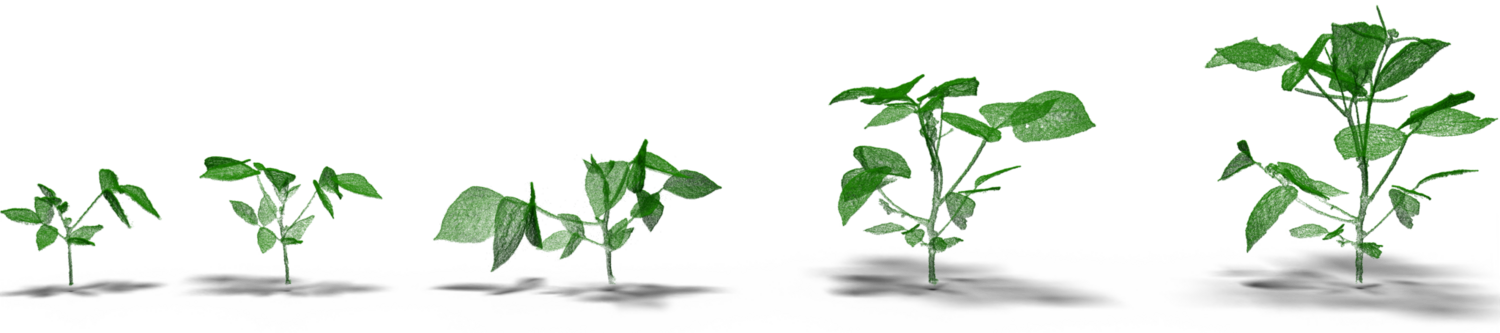
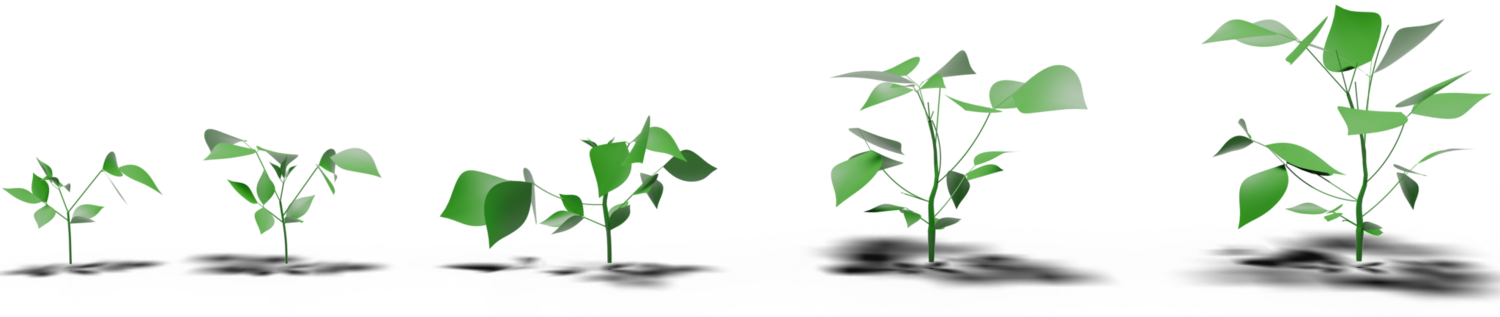
A single mung bean tracked through five vegetative stages using one consistent template.
Analysis-ready
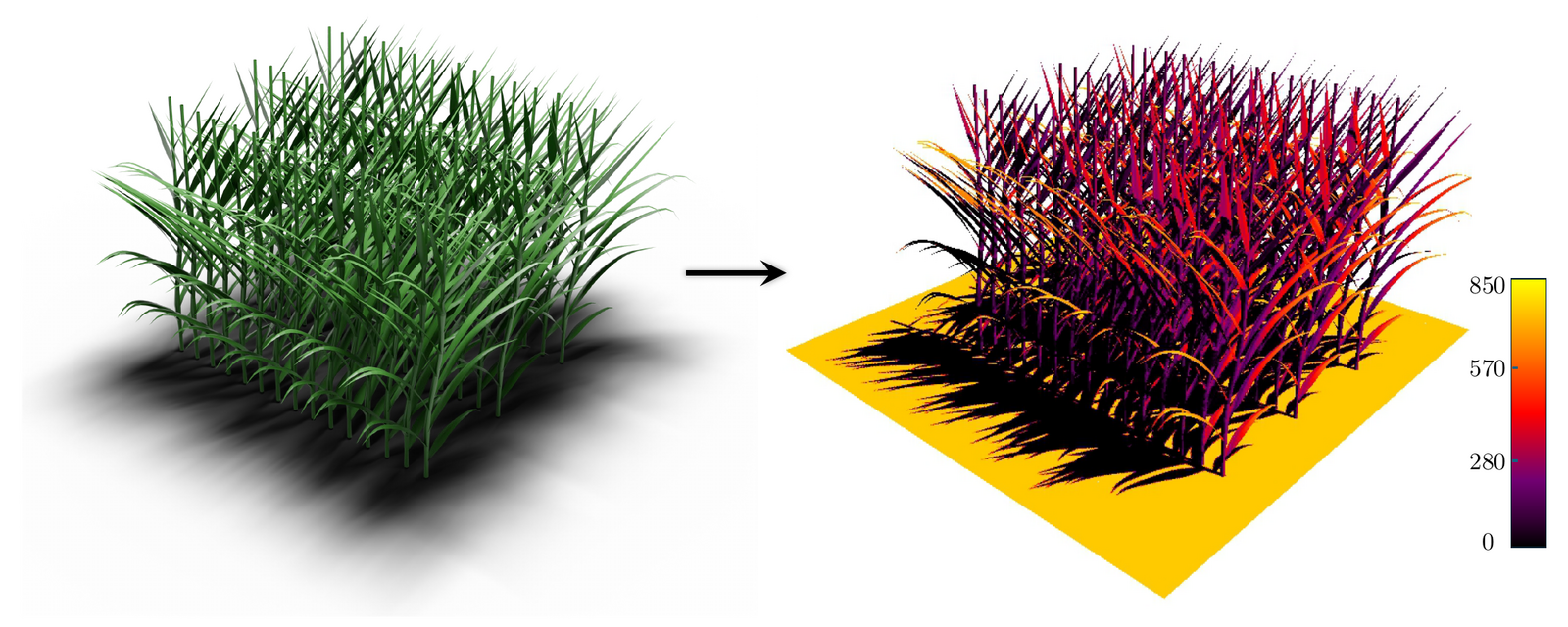
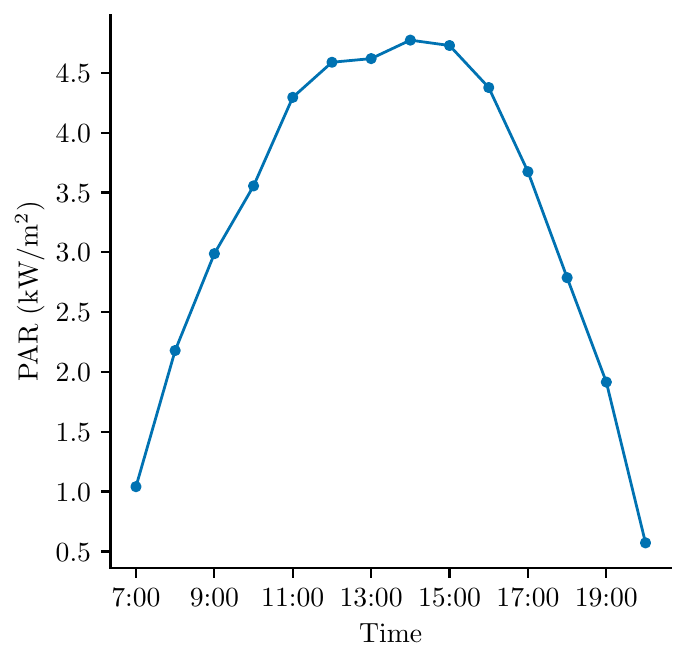
Because the models export analysis-ready meshes, procedural fields can be coupled to HELIOS to simulate diurnal photosynthetically active radiation (PAR) interception across crops and growth stages.
Acknowledgements
This work was supported by the AI Institute for Resilient Agriculture (USDA-NIFA 2021-67021-35329), NSF BTT-EAGER IOS-1842097, NSF 2412929/2412928, and Iowa State University's Plant Science Institute. It was also supported by NSF 2417510, 2412928, and 2309564 and USDA-NIFA 1032382 and 1032672 to Purdue. We thank Ian Ostermann for help with Blender rendering and visualization used in the preparation of figures.
Team
 Mozhgan HadadiIowa State University
 Talukder Z. JuberyIowa State University
 Patrick S. SchnableIowa State University
 Arti SinghIowa State University
 Bedrich BenesPurdue University
 Adarsh KrishnamurthyIowa State University
 Baskar GanapathysubramanianIowa State University
Cite
@article{hadadi2026floraforge,
  title   = {FloraForge: Procedural Generation of Editable and Analysis-Ready 3D Plant
             Geometric Models Using LLM-Assisted Template Design},
  author  = {Hadadi, Mozhgan and Jubery, Talukder Z. and Schnable, Patrick S. and
             Singh, Arti and Benes, Bedrich and Krishnamurthy, Adarsh and
             Ganapathysubramanian, Baskar},
  journal = {Smart Agricultural Technology},
  year    = {2026},
  doi     = {10.1016/j.atech.2026.102316}
}